If you could recommend one step that anyone could take towards healing, what would it be? (Part 4)
This is my favourite question to ask each of our Wag Tales podcast guests, and so far, I’ve had the privilege of posing it to approximately 60 incredible individuals (and counting).
Some of our guests share perspectives from working and leading in the field, while others offer insights drawn from their lived and living experiences. Together, they provide a wealth of helpful recommendations.
I feel incredibly grateful to host a podcast that allows me to learn from such brilliant people, and I’m even more thankful for the opportunity to share their wisdom with others.
In this post, I’m excited to share part 4, with another collection of answers. This is a series, and you can find the other 3 parts on our blog.
I invite you to read through these suggestions (directly from our transcripts) and consider what might resonate with you or someone you’re supporting.
Have a recommendation of your own? We’d love to hear it—please share it with us!
Jaime de Loma-Osorio Ricon, Deputy CEO of Banksia Gardens Community Services and Director of the Northern Centre for Excellence in School Engagement, Ep 48, recommends:
Process our own story first.
“I think a lot of people have come into the community sector because we are a little bit broken. We've all had our own experiences. There's nothing wrong with that, but if that is not done properly, it can be very dangerous. So I think you have to do the work on yourself to understand whatever happened to you that made you a little bit broken. Again, you may want to ensure that no other people go through the same experiences without support. But you need to make sure that all of that is processed in some ways and then that you're able to ensure that when you are working with young people, it's about them and it's not about you, if that makes sense.”
Ahmed Sulaiman, language teacher, entrepreneur, Ep 49, recommends:
Giving.
“I understand first what I really experienced myself. After experiences, we always figure things out. So, what I understand is that our giving is unlimited. It’s a gift. Really, that is the first thing that you should do, caring about your friends, your family, your loved ones and giving our gifts. That's what I experienced in my life, and it’s been the best for me. Like, no matter what you have in your life, when you're trying to help people, like be with them, support them in different ways, it doesn’t have to be financially, there are lots of different ways, I promise you will find the results amazing.”
Dr Corey Keyes, Sociologist, Psychologist and author, Ep 50, recommends:
Engage in spiritual work.
“This journey that we’re on, it’s fundamentally spiritual, and that’s our work here. You don’t have to get into the religion. You don’t have to cross your legs and become a Buddhist. What you need is to engage in some form of spiritual work. The job is to become better people for ourselves and each other. I think we become truly healthier when we understand the nature of life and the struggles we share in common, and how we can’t do this alone. That’s one lesson I’ve learned, I can’t do this alone. None of us can. The universe is interconnected, and we’re all connected. We can’t do this alone.”
Luke Anderson, founder of Fair Threads, Ep 51, recommends:
Long-term vision into short-term actions.
“I would say that you should sit down with a pen and paper, and you could write down where you want to be in 10 years, the person that you want to be ideally, and then figure out your work back from there. That's my tip to you, that's what I did. I sat down with just a notepad and a pen, and I wrote down my name, where I live, what my life would look like on a, on a regular day, what everything looks like across my life in 10 years’ time. Who will be in my life, what I'll do for, for a job, all that kind of stuff. And then that helped me. I was able to work back from there. What do I need to do, where do I need to be in nine years, 8,7,6,5 years, back to one year, back to six months, one month, one week, one day and then one hour. You know, and I knew that I was then able to do some things that to other people externally might not make a lot of sense, or they might not see value in them. But I saw the value in how it was building toward helping the the long-term vision that I had to become the person that I wanted to become.”

Matt Pitman, educator, author, and advocate for rethinking how we build connection in school, Ep 52, recommends:
Active Listening.
“I think it would be to listen actively because I think if you can start doing that, others will provide that same thing for you. And we don't pause and actually listen to each other very often. And so I think there's a lot to be learned from actually hearing what somebody says in terms of your own healing. And then when they understand that that's what you're offering, they'll offer it back. And I think that is that would solve a lot of things that potentially tearing us apart a little bit. I think just actively listening and taking it in and and not providing an answer, but helping find their answer. If you can do that, that'll be reflected back at you, and then you'll kind of get a double healing impact.”
Emma Gentle, educator, parent, and supporting Mums in Business through emotionally intelligent practices, Ep 53, recommends:
There’s no shame in having a story.
“Just get curious. Just know that we all have a story. We all have a path. We've all experienced trauma in one sense or another. And it's not what happened to you. It's the residue afterwards. And it's a completely normal human response to challenging times. And the more we can get curious and not make it mean something about ourselves, the more it allows that openness to actually go there. Know that there's not one person on this planet that doesn't have a story, that doesn't have, you know, an imprint. And the more that we share, the more well, as Brene says, vulnerability is the antidote to shame. So the more that we just get this work out there and talk with one another, the more we feel safe to do this work. So just start to get curious.”
Danielle Mifsud, Academy Director at Humans of Purpose Academy, Ep 54, recommends:
Imagine what thriving could be.
“Yes, unplug from your mind, from the stories, from technology, whatever it is, and go into nature and, you know, being able to sit in that place and listen deeply to what is thriving for me. If I had a magic wand and everything worked out in three years time or next week, all of these problems I'm thinking about are gone, what would that be like for me? And actually tune into that. Say it out loud if you're brave enough. Just give yourself permission to be in that is what I would say, because our mind can only make decisions or suggestions from the past experiences. It doesn't have anything else. And so if we stay in that loop and in the problem-solving stage, we will just keep recreating those experiences and we won't even see what's right in front of us. Leave the phone at home, do all those things, even if it's just your feet on the grass, you know, for a few moments, and just being curious about what thriving could be, that would, yeah, be the first step I'd recommend.”

Liam Casson, CEO of Reset Moves, Ep 55, recommends:
Be fair to yourself.
“What's coming to mind for me is the saying, which I try to replicate in my own mind, is being kind to myself. But I think sometimes it's not even that. I think it's for anybody, it's to be fair to yourself. I think there's a big distinction, you know, between the two. So they're they're, they're probably the two things I would say to be kind to yourself, but to be fair to yourself. And I think also adding to that, asking for help. It's a sign of strength. It's not a sign of weakness.”
Benjamin Perks, global child-rights advocate, educator, and author of Trauma Proof, Ep 56, recommends:
Protect and promote each other’s inner world.
“I think slow down and recognise it's completely normal to have trauma and issues of self-esteem and all of that. If you've had a difficult childhood, it's just normal. It's not weird, you're not strange. You have to learn to integrate the different parts of yourself because often we box them off when we've had trauma. A lot of self-compassion and to recognise that you are, and every individual is special. Recognise it's completely normal, almost completely normal, you can heal from it. You may take time. You never never completely override it. You’re always learning. It's an ongoing thing. I think it was really important to remember how unique everybody is, right? We've got trillion billions of like neurons. Everybody's got very complex neurobiology that's unique to them. And so we all respond differently to different stuff, but there are patterns that tell us now much more about our inner world than we ever knew before.
I know you asked for one thing, but there’s another thing I’d say about healing: it’s investing in relationships. If somebody has really struggled, they've grown up with a sense of fear of getting close to other people. And then they can come to a point where they can be attuned with another person's inner world. And they can promote and protect their inner world, another person's inner world. That, to me, is a perfect definition of love. And more people heal from because of love than because of therapy.”
Aaron Stark, writer, speaker, and mental health advocate, best known for his viral TED Talk, “I Was Almost a School Shooter”, Ep 57, recommends:
Be the water and shift with the tides.
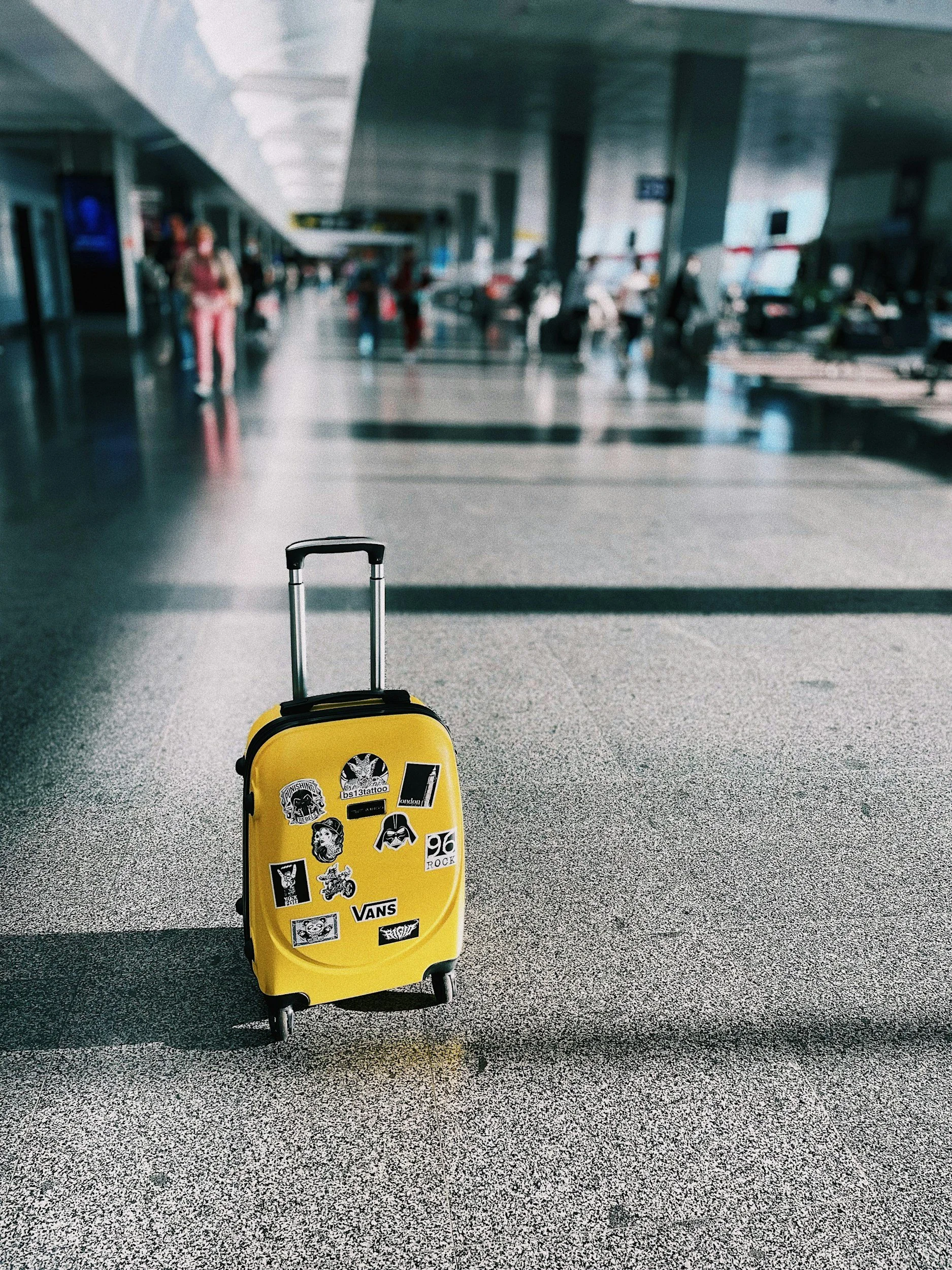
“So my recommendation as one step towards healing is what I tell my kids, I tell all of my kids that the path was like luggage that you can have on your path. It's like, it's like a suitcase in your arm. You'd have it all, you can carry it around, and you can drag it with you, and it'll wear you down. You can open up on the ground and spill everywhere and cause a big problem. You gotta pick it all up and shove it back in a suitcase and drag it with you, or you just set it down and walk away from it, but it doesn't mean you're leaving it. You can turn around and grab a shirt if you want. It's sitting right there. It doesn't mean you need to carry it with you every minute of every day. You can set it off and walk away from it. You can be changed because every single day is changed. Every day is different from the next one. The only thing absolutely certain is that tomorrow is going to be different than today. It might not be better, and it might not be worse, but it will be different, and we have choices with that. We can either resist that change and get worn down like like the stones on a beach, the water wears down the Pebble, or we can adapt with that change. We can be the water itself, and we can shift with the tides. And so I say be the change. That's all we could ever be. Because tomorrow's going to be different, so why try to be the same?”
Dr Nathan MacArthur, grief counsellor, researcher, and the founder of Sydney Grief Counselling, Ep 58, recommends:
FInd a way to carry our grief and losses with us.
“I hope this is OK to do, sort of gently, I have a little concern about the word healing when we talk about grief, because I think that's something that doesn't fit for all people when we think about grief. And I think that idea that we can heal, and then we are somehow fully healed, and everything is then OK is something that I would, yeah, sort of challenge in people's thinking. That actually, that permission may not be to fully heal, that actually grief can be a part of us, that it can sort of be a part of our life stories and the the losses that we've had and the sort of importance of continuing that. So for example, in the bereavement space, I have people who worry that they still deeply, deeply miss a husband or a wife or a parent, someone that was very important to them and that that hasn't healed. And I think missing is not not healing in my mind. It's about the relationships continue to be important.
So I, I guess rather than sort of thinking in healing terms, I would more think in terms of how people might sort of carry that grief with them in a way that they get to recognise it in a way that might allow them to carry a little more lightly. And I think that there's a couple of things with that that I might suggest one would be around having an outlet to express that in a way that allows it to be validated. So whether that's with a friend or family member or a professional that we're able to talk to, that will work for some people. For other people, it might be in writing that they're able to express some of those things.
I think the other part is maybe around having some rituals that we create ourselves. So yes, in a sort of bereavement space, we have that ritual of the funeral, and we might have the ritual of visiting a cemetery or a place where ashes are scattered. For other sorts of losses and griefs, we might need to be more creative in our own ritual. And maybe it is about grabbing a cup of coffee and sitting in the park and allowing myself sort of 10-15 minutes just to be with that emotion and that experience of grief or whatever I'm struggling with, to allow myself to look after myself with that in that moment. Or maybe it is I have a playlist that is part of me connecting with that, that grief that allow myself a little period of time just to be with us as some space to recognise and validate that.”
Danielle Murphy, foster carer, writer, Ep 59, recommends:
Patience on the journey.
“One recommendation towards healing, I think, is being patient with ourselves and being kind with ourselves, having compassion, though, I think just having that mentality that you're on a healing journey, and it is challenging, and it's not easy, it's messy, it's complicated. And so to just have that patience with ourselves to walk that journey of healing.”
Jesse Diggins and Nathan Castle, Directors of Psychs in Schools, Ep 60, recommend:
Nathan Castle:
Sleep.
“We've all got different challenges, unique ways of thinking, unique backgrounds, but one thing that touches everyone, guaranteed, is sleep. And so what I would say is if you are struggling with sleep, and many, many people are, and actually most people with mental health issues also have difficulty sleeping, getting on top of that might not solve your actual problems when you're awake, but you'll feel a lot better about them. And most people, when they think about sleep difficulties, think about going to the GP for medication. In most cases, it's actually only effective for a short term and then becomes worse for your sleep. So, finding a psychologist or even an online resource, there's a free resource called This Way Up for insomnia. It really works. And sleep interventions work 90% of the time. It's the most effective intervention that psychology has. So if you're going to do one thing, I don't know what challenge you know each person has, but sleep should make a difference.”
Jesse Diggins:
Don’t do it alone.
“I find this question so hard to answer. Like my mind's just jumping around, and you know, I can, you know, I can talk about different things that I would speak to, you know, different therapeutic modalities that I like or utilize kind of thing. But having filtered through a few, my answer is actually whatever you choose to do, don't do it alone. That fundamentally to heal yourself, I believe you need to do it in connection with somebody else. And I think that the people who struggle to heal the most are the ones who find the most difficulty, you know, having the vulnerability to speak about that and share stories and, you know, share the difficult things in their, in their minds and in their hearts with, with somebody else. And say, you know, it doesn't have to be a therapist. It can be somebody in your life who is a secure person who can hold you through that. And you know, obviously there's, trained professionals who do a great job with that too.”
—————————————————-
These Wag Tales guests offer a variety of perspectives on healing, highlighting that there’s no single path that works for everyone, all of the time. What you need today might not be what you need tomorrow, and that’s why this list is so valuable. Whether you're looking for ways to connect with yourself, others, or something bigger, there’s a tip here that might just speak to where you are right now. Explore these recommendations and keep in mind that healing is a journey; feel free to revisit these insights as your needs evolve.
As we continue to record episodes for the Wag Tales, we will continue to explore this question with our guests. If you are curious to find out more, you can find each episode and subscribe to the Wag Tales on your preferred platform here.