Is working in complex settings a marathon or a relay?
We expect a great deal of the adults who show up every day in trauma-affected spaces.
As educators, youth workers, social workers, and leaders, we are often absorbed by the work, treating it with urgency and full commitment.
But over time, a clear pattern emerges: talented, values-driven professionals become exhausted, overwhelmed, or leave roles they once loved. We cannot build safe, healing environments for young people if the adults within those environments are operating in survival mode (or leaving the work completely).
Rachel Naomi Remen (1996) wrote:
"The expectation that we can be immersed in suffering and loss daily and not be touched by it is as unrealistic as expecting to be able to walk through water without getting wet."
For too long, I think we liked to pretend we could support our trauma-impacted children and young people without feeling any of the impacts ourselves. We thought we could stay dry while walking through water. Or at least, we chose to put up with the wet socks.

The problem with the marathon metaphor
We have all heard the saying "it's a marathon, not a sprint". It is often used to describe the long game of working in education and the helping professions. It is meant to reassure us, permitting us to take our time with the work.
But I have been wondering whether this metaphor is actually harming our wellbeing.
Have you ever run a marathon? It is exhausting. It is a solo pursuit. It often ends in collapse. It assumes you will keep going until you have nothing left.
Recently, I came across a far better metaphor for those of us in complex settings. Dr Rola Hallam, a Syrian doctor and humanitarian, spoke at the 2024 Trauma and Mental Health Masters event in Oxford. She said, "It's not a marathon, it's a relay."
She was speaking about trauma work and the weight of responsibility we carry in complex, suffering-affected spaces. Her message was clear: the work is far too heavy for any one person to hold alone. And it applies powerfully to education and youth support.
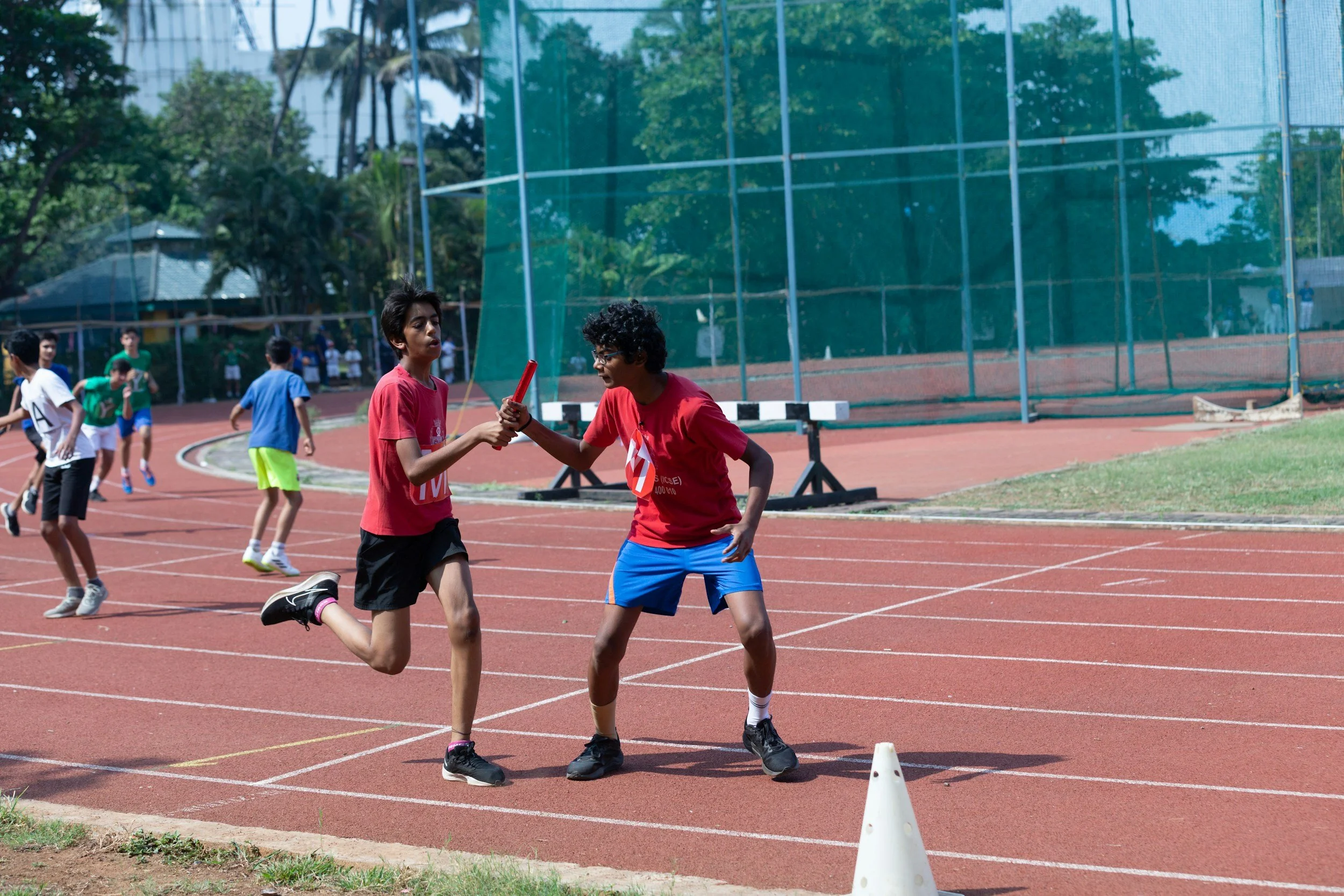
Passing the baton
A relay is something I can get behind.
I carry the baton for a while, and then I pass it to someone else. I rest. I take care of myself. And when I am ready, I will pick up the baton again.
The baton itself becomes symbolic, too. Once I have passed it on, I do not need to feel its weight anymore. I do not need to take it home with me. Somebody else is taking care of it.
This work isn't about endless self-sacrifice. It asks us to notice when we are pouring from an empty cup, and to be honest about what it might take to refill it. Sustainable care cannot come from exhaustion.
It comes from rhythms that allow us to rest and return. From shared responsibility. From cultures where it is safe to say "I need support" without fear or shame.
The cumulative cost of caring
When we work with someone who has experienced trauma, we may feel some of the weight of their experiences ourselves.
We can be exposed to others' trauma by directly witnessing an event, receiving a disclosure, responding to dysregulated behaviour, or feeling powerless to change systemic injustices. The cost of this emotional labour is often cumulative, building over time.
That is why the relay matters. It reminds us that this work was never meant to be carried by one person, or even one role. When we honour that, we stop confusing endurance with care. We stop praising self-sacrifice and start protecting capacity.
And it asks each of us to notice when we are running someone else's leg, when we are holding a baton that was never ours to carry. When we have forgotten that we are allowed to stop, hand it over, and breathe.
Wellbeing then becomes something we build together, not something individuals are expected to manufacture on their own.
——————-
This blog is drawn from Chapter 1 of my book, Beyond Survival Mode: Thriving as a Trauma-Informed Professional. The book explores what it really takes for the adults doing this work to move beyond coping and into something more sustainable, for themselves, their teams, and the young people they care for.
If this resonates with where you are right now, I'd love to stay in touch. You can find out more about the book and the work of Wagtail Institute at wagtailinstitute.com, or reach out directly if you're curious about what trauma-informed wellbeing could look like in your setting.